Thursday, October 09, 2008

What Matters, Exactly?

Is it just me, or does this Chase commercial make all you responsible-with-money types want to hurl a blender at your TV?


"Text Chase for your credit-card balance," the narrator instructs us, "and decide what to spend in seconds."

Yeah.

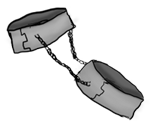
Sounds like a great plan — if you want to practice HUGE FAIL. Like this guy:

Labels: , ,

— Posted by Michael @ 8:44 AM


Tuesday, October 07, 2008

One More 'How We Got Here'

An excellent piece showed up on 60 Minutes tonight — one I wish all my readers, family members, and friends and coworkers would watch. You can find it here:

60 Minutes: Wall Street's Shadow Market

Set aside about twelve minutes for this one. And get ready: Folks still talk lots about "subprime," and rightfully so. But "credit default swaps" are the real elephant in the room...

Labels: , ,

— Posted by Michael @ 8:56 AM


Monday, October 06, 2008

10 Years of SPY Dollar-Cost Averaging

For those who enjoy seeing historical market wisdom blown all to heck, I present to you the following chart:

10 Years of Monthly Dollar-Cost Averaging into SPY


What's that show? Well, if you had made monthly investments of $1,000 into an S&P 500 exchange-traded fund (SPY, in this case) beginning in October of 1998, your 10 years of investment discipline would now be rewarded by ... oh, a loss of $5,188. This includes dividends being reinvested, but does not include any transaction fees. So, in the real world, actual losses would be worse. (All this assumes my spreadsheet math is correct, of course. I make no guarantees!)

As of early October 2008, your investment's cost basis would be $132,121. Its value in the marketplace, however, would be only $126,933. That's a loss of $5,188, or 3.93 percent.

Making this particularly painful would be the fact that as recently as October of 2007, your account showed an unrealized gain of over $34,400.

Ouch.

Never fear, though. Dave Ramsey assures us that "good growth-stock mutual funds" will return, on average, ten or twelve percent per year. (Never mind the fact that the majority of mutual funds actually lag the performance of the S&P 500 over any given period of time.)

Stuff like this is precisely why financial gurus' relentless devotion to mutual-funds as sources of "double-digit annual returns" drives me nuts.

Labels:

— Posted by Michael @ 8:04 AM


Thursday, October 02, 2008

Total Disbelief

For anyone out there who thinks the taxpayer isn't going to be financially disembowelled by the current Mother of All Bailouts (until the next, bigger one comes along), I'd suggest you take a gander at this:

Fool.com: Inside a Toxic MBS Pool

I contend that Paulson & Pals will be forced to pay NOT fire-sale prices for mortgage-backed securities like the disastrous one shown above, but rather, they'll be paying premium prices in order to recapitalize the banks (both domestic and foreign).

I will be shocked and awed if the American taxpayer, over time, does not lose hundreds of billions of dollars in this venture.

(Yeah, I'm an admitted cynic.)

Labels:

— Posted by Michael @ 8:02 AM


Thursday, September 25, 2008

And Pigs Will Fly

I have deliberately restrained myself from commenting too much on the historic happenings taking place now in Washington, and, by hands-out extension, NYC.

Suffice to say that in my opinion, the U.S. taxpayer is going to take a beating in this. And I'm furious — not surprised, but furious — that we're in this position at all.

One of the things which sets me off: The current spin from supposed "experts" who state that this bailout will actually be profitable for the taxpayer. Barry Ritholtz explains it far better than I:

Big Picture: Latest Bailout Plan Spin: It's a Money-Maker!

The spin reminds me of the classic retail stock jockey. The guy has buried his clients in a series of bad trades, bad judgment, poor risk management -- all motivated by his self-interested, commission-generating trades. The only way out of the money losing mess, pitches the broker, is a big, Hail Mary trade.


Hail Mary, indeed. Let's all buy the "worst of the worst" mortgage securities in existence (we will), pay above-market prices for them (we will), borrow and/or print scads of money to do it (we will), and hope that the housing market recovers and loss rates don't worsen and values magically stabilize and then rise at a rate greater than inflation (they won't).

After listening to a fair amount of local talk radio (OKC-based) the last couple of days, I'm staggered by the amount of misconception that's out there regarding the (latest) bailout. Given what's happened, I suppose I shouldn't be surprised. Some choice snippets I recollect:

"It's just a loan. We're gonna get all our money back anyways."

"Why are we doing anything? Even if Wall Street collapses, eighty-five percent of the folks around here won't notice a thing."

"They're making a big deal out of mostly nothing, is what I think. What happens to Wall Street makes no difference to me."

"If Buffett is buying, then that's good enough for me."

Folks who think they're going to be somehow immune to all this are nuts. Folks who think that Buffett and Gross aren't "talking their book" are naïve.

Yeah, keep believing it: The U.S. taxpayer is gonna make money on this government-run Hail Mary.

Right.

And pigs will fly.

— Posted by Michael @ 8:55 AM


Monday, September 22, 2008

A Look Around

Readers will forgive me, I hope, for not clogging up teh Interwebz with so much as a single post last week. It's just that each time I sat down to scribble something, that "something" always seemed to be just so much pocket lint in comparison to what was going on in the financial world around me.

I have this distinct feeling that we're watching a pivotal point in world history unfold before our eyes. And I'm not at all confident in my abilities to lay out something that rises to that level.

However, I'll start here:

Lots of bloggers (and blog commenters) around me seem to have taken this opportunity to espouse the path of "Get greedy when others are fearful" insofar as stocks and investing are concerned. "Now's the time to buy," they write. "Everyone's running scared! Bargains abound!"

Well, lots of folks ARE running scared. No denying that. But as for buying stocks hand-over-fist, well, I can't go there. I just can't.

For my part — and I've felt this way for a year, at least — I suspect that we're staring down the barrel of a pretty high-velocity poopstorm. Not one to be taken (or "bought") lightly. One regulatory or legislative misstep here or there, one really bad decision from Someone Who Matters, and that's all it'll take: Down Goes Frazier. (I'd also be the first to admit that "doing nothing" would be a monumental mistake as well.)

So have I gone all Chicken Little? Perhaps.

But I figure that my trepidation is largely a function of my watching people interact on a daily basis. Everyone — and I mean everyone — seems to want something for nothing. Or, at least, "something big" for "something negligible." And they feel they deserve it.

And for the last twenty-odd years, they've gotten it.

Most of Wall Street is guilty of this. ("Risk? Hardly. Our mathematical black-box models eliminated that.")

Generations X (mine) and Y are guilty of this. ("I deserve a mid-five-digit salary right out of college!")

Lots of Joe and Jane Sixpacks are guilty of this. ("Gimme lots of services. Lots. Oh, and a big ol' tax break.")

Underwater, nothing-down homebuyers are guilty of this. ("No, really! I'm entitled to a mid-six-digit profit on my home!")

And yes ... I, too, am guilty of this. (Sure enjoyed those zero-percent transfer offers. Easy money.)

And now the piper wants to be paid.

So the question begs: Who's going to pay?

In one way or another, we all are.

If a country is this reliant on an infinite expansion of debt and credit, and if any sizeable constriction in said credit issuance sends the financial system into convulsions, then how exactly can anyone with even a smidge of common economic sense feel good about our system going forward?

Tell me, please. I'm all ears.

— Posted by Michael @ 8:36 AM


Tuesday, September 09, 2008

Clicks Away: Your Old 1040s

Taxes
I'm told by this month's Kiplinger's Personal Finance magazine that the IRS plans to provide taxpayers with online access to their previous years' tax returns ... soon.

For a guy like me who's kept copies of every tax return he's ever filed, the fact that the new IRS online service will allow us to view and print our tax-account information for up to three previous years is no biggie. But for some folks, it might be helpful. Until, of course, the IRS site is hacked by some 11-year-old grocery-bagging ne'er-do-well from Duluth.

Here's a decent snag from the article:

By year-end, the new "my IRS" accounts could be accessible through a supersecure portal of the agency's web site, www.irs.gov. At first, you'll likely be able to view and print return data and other account information going back three years. As the system develops, you may be able to file for an extension, request a change of address, or do other tasks online.


Well, goodie. Though I would've thought that most people would already have fairly-quick access to something as important as one's previous tax returns.

Ah, but there I go again — assuming Joe and Jane Sixpack actually have a shred of organization in their lives.

Labels:

— Posted by Michael @ 8:52 AM


Monday, September 08, 2008

990 Days

Back in early 2006, when my wife and I refinanced our then-showroom-fresh Honda Accord, I wrote:

The balance in the right column shows my current balance on the loan. My accelerated payment schedule will, if I can stick to it, have it paid off within three years.


At that time, one of the ho-hum paperwork tasks I had to accomplish was to write a letter to the credit union's board of directors. They were hesitant to fund our loan, as a large portion of my income was bonus-based. From a credit union's point-of-view (a smallish, local one, anyway), that's an understandable tripping point. Bonuses are a lot like campaign-trail promises: They can disappear real quick.

Still, I remember thinking to myself back then that the credit union was mostly wasting time by pondering whether I'd be good for the loan. Rather, they'd be more on target by wondering just how long that 5-year, 3.95% auto loan would be cash-flowing for them. The credit union's risk was never about having to repo the car. Instead, their only real "risk" was early payoff.

Now, 990 days after we initially purchased the Accord, the credit union is gonna have to find someone else to whom they can loan that money. Our car loan is paid off.

And once again (see "So Long, Sallie Mae" for more on our first trip to this decidedly unAmerican status) we are debt-free except for our mortgage.

That Last Payment's a Lulu

We've had the cash available for full payoff for a while, actually. But as I noted in "Why Not Pay it Off?" the thought of completely draining my savings is one of those things that keeps me up at night. So we waited until a bit more savings padding was present.

Then, this past Friday, I transferred the final $5.6k chunk into the auto-loan account. Within moments, the loan account disappeared from my Account Summary screen completely. The '06 Accord is now well and truly ours, from grille to kid-seat to trunk.

For those folks who, like me, have a sick interest in dollar figures and stats, I will divulge that over those 990 days of auto-loan bondage, we paid $741.71 in interest. That's pretty close to seventy-five cents per day.

"Had you carried the loan to its original 5-year term," my spreadsheet whispers, "you'd have paid over $1,861 in interest. By paying the loan off in 2 years, 8 months, and 16 days, you saved just a paperclip over $1,119."

Interest Comparison


Obviously, the true cost of buying new cars is stout. But we now have an '06 Accord with 23k miles on it, and while it's not dent-free, it is lien-free. Which, I would say, is better.

I'm of the belief that written goals are pretty much a necessity. In this case, regarding the car loan, our goal was to have it paid off in three years. We beat that mark, with four months to spare. Hooray for us.

So Baby Step Two is zapped. Up next: Fill up that Emergency Fund.

Labels: ,

— Posted by Michael @ 9:07 AM


Wednesday, September 03, 2008

One Calamity Away

If you can do so, set aside about 18 minutes to watch the August 22 segment of PBS' Bill Moyers' Journal:

PBS / Bill Moyers' Journal: "One Calamity Away"

"So America's middle class, our 'fearful families' as some people call them, is taking it on the chin," Moyers tells viewers in his monologue. "The history-making nominations aside, all the rhetoric from all the speakers at next week's Democratic Convention will be so much hot air above the Rockies unless the party comes to grip with how people are living and hurting today."

Worth a looksie.

Labels: , ,

— Posted by Michael @ 9:07 AM


Tuesday, September 02, 2008

Gone in Sixty Minutes: $100

When I was a kid, a hundred dollars was a whole lot of money. Heck — my very first paycheck was only sixty-something bucks. I remember going out to the garage to show it to my dad, and telling him how surprised I was for the paycheck to be THAT MUCH.

My, how times keep changing. This, the tab from our last Sunday afternoon of August, 2008:

It goes quick, huh?


A hundred bucks — gone in sixty minutes.

Good thing inflation is only five percent or so, while the most popular online savings account pays a mere three percent.

That, kids, is what's called a losing battle.

But you still gotta fight it.

Labels: ,

— Posted by Michael @ 9:16 AM


Tuesday, August 26, 2008

Down With Downpayment Assistance

Down With Downpayment Assistance
The stupid crap just never goes away, does it?

Again we're going to be fighting over down payment shenanigans in Washington, it seems. One of the few bright spots — maybe the only bright spot — of last month's housing bill (H.R. 3221) was the fact that it did away with down-payment assistance programs (often called DPAs or DAPs) indirectly funded by the seller of the home.

To my mind, DAPs are flat-out nasty. They're just a shiny way to launder money. What they produce, in effect, are sellers bumping up their sales prices to cover (1) their own "down-payment gift" to the buyer, and (2) the fees paid to the nonprofit charity (ahem) who funnels this money from seller to buyer.

In these cases, since the buyer comes to the table with zero funds of his own, the mortgaging bank is effectively loaning one hundred percent of the sales price. The buyer has no "skin in the game," as it were. So when times get hard for Mr. Homebuyer and the mortgage payment starts to seem a little too burdensome ... well, you know where it goes from here. You've watched the news.

So seller-funded DAPs got the legislative axe last month, as mentioned above. Within moments, it seems, a few Congressfolk got together and popped the cork on H.R. 6694. Which, as you might guess, seeks to reinstate DAPs. And now we get this website:

RallyforHomeownership.com

Cute, ain't it? Oh, they're all about home ownership, they are. They suggest that you and I — all of us who value the Dream of American Homeownership — contact our Senators to let them know we want them to support H.R. 6694. Here's a grand snippet from their "Why?" page:

DPA Program Is Specifically Designed to Meet FHA Borrower Needs - Charitable DPAs programs aid borrowers who have sufficient credit to qualify for government-backed loans but have insufficient capital to meet the three percent downpayment requirement for an FHA loan. Charitable DPAs bridge the gap by providing this downpayment as a gift to the buyer, helping those who otherwise could not become homebuyers. The DPA program was developed and designed to work with FHA’s specific mortgage requirements to expand homeownership opportunities and serve the population of homebuyers that it is FHA’s mission to serve - minority, low-income, and working families with limited access to capital.


Why, indeed. Look — I don't care if a borrower's FICO is 849 and his wallet's crammed full of Amex Black cards. If he can't scrounge up three percent of a home's sales price FROM HIS OWN SAVINGS to put toward the purchase of said home, then he shouldn't be buying that home. And the bank has no business lending him the money to do it — especially when Joe Taxpayer seems to be the patsy at the other, far end of the "Who gets to eat this?" deal. Am I so completely off-base with this?

Some people are simply not ready to be homeowners.

Since the website above doesn't clearly make its ownership known, a few kind souls at Ticker Forum got involved in a discussion and went digging a bit. Turns out ownership belongs to the Genesis Foundation of Valparaiso, Indiana ...

... who just happens to pop in this Fort Worth Weekly article (hat tip Etz3l):

But what is making Dauphinot maddest is the increased use of “down payment assistance” programs that give mostly first-time buyers a “charitable” gift of the down payment money needed to close the loan under Federal Housing Administration loan rules.

Here is how it worked on a recent loan deal, coincidentally, just down the street from Felipe Garcia’s house in Edgecliff Village. According to documents sent to the buyer and obtained by the Weekly, the asking price on the home was $85,000. But the proposed buyer had bad credit, and the lender wanted a hefty down payment. So the Genesis Foundation, based in Indiana, was brought in to “give” the buyer the $7,200 down payment in return for a $595 fee that was rolled into the loan. In return, the company selling the house gave Genesis a tax-deductible “gift” of equal value and paid Genesis a $750 transaction fee.

It’s illegal for a home seller to give down payment money to a buyer, under federal lending rules. But in this case, the down payment technically came from a charity. In reality, it was just a way to move the money from one pocket to another. The new purchase price for the house was $93,000. So, in the end, the FHA (which requires at least a 3 percent down payment) was backing a higher loan with no real down payment. And instead of an $85,000 loan, the buyer now had a $93,000 loan.

“When these loans don’t get paid, the taxpayers are going to have to cover them,” said Dauphinot, who has been in the business for 30 years. “Everyone likes to portray these foundations as groups that are helping out the poor and getting them into home ownership. But it is all about getting around laws and inflating prices in the market. That house went from $85,000 to $93,000. The borrower now has a bigger loan to cover. That’s not helping the poor.”


Sums it up ever so nicely, doesn't it?

I'd be pumping H.R. 6694 if I were them, too.

But I'm not. I'm just a guy who somehow managed, with his wife, to piece together a three percent down payment on our first home way back when we were earning in the low- to mid-$20k range per year.

And a guy who knows dumbassery when he sees it.

So I believe I'll be better served if I simply write to my Congressfolk and indicate my complete and utter disdain for DAPs and, in particular, H.R. 6694.

Labels: ,

— Posted by Michael @ 8:25 AM


Monday, August 25, 2008

Necessities That Aren't

Sure, the article was published back in June, but I just now found it. And it piqued my interest:

Bankrate: 12 New Necessities That Drain Your Cash

Author Jay MacDonald gives us a list of twelve items which, he says, current American society deems "necessities." As he writes:

However, modern life has created a host of "new necessities" that many people swear they cannot live without -- a daily latte, premium cable, a weekly manicure, a new leased automobile and cell phones for the family.

In reality, there's a more accurate word for those pricey add-ons: entitlements.


Just for kicks 'n' giggles, I wanted to take a look at Jay's twelve "necessities that aren't" and see where I stand on each one. So here goes.

Daily Latte
My wife and I love good coffee just as much as the next couple, but you'll see us standing in line at Starbucks maybe once per month. I do occasionally order coffee beans over the 'net, and I most certainly do brew my java at home (as in, every morning). But you'd never find me spending $4 or $5 per day on coffee. Not a chance.

Cable TV
Guilty as charged. We do have cable TV, complete with a host of premium channels (HBO, Showtime, etc.) and HD programming. If times became tough, I could easily give up the premium channels. The rest of it? Tougher. But it could be done.

Manicure/Pedicure
Uhhh ... whatever. Not an issue for my wife or myself.

Botox
Seriously? This is a necessity for WHO outside Hollywood?

Bottled Water
I drink my share of this stuff. But the article seems to imply that folks invest in home-delivery services for water, and I'm not in that league by any stretch. A big ol' tray of Aquafina bottled water costs me less than $4 at Sam's Club. And even then, we reuse the bottles with water from our Brita filter pitcher (and at my work, the Ozarka service).

Second Car
Sort of depends on the household, doesn't it? Ours is certainly a two-car family (well, three cars, if you count the rarely-driven '67 Mustang in our garage). My '95 Nissan truck's long since paid for, and our '06 Accord will be likewise in a few months. If dire financial times came along, could we become a one-vehicle family? Could carpooling become a household task?

Some consideration of the idea suggests that my work schedule, and our kid's school schedule, would make this somewhat challenging. But since Lisa (my wife) is a SAHM, it could be done.

How much money might be saved this way? For us, with both vehicles paid for, the financial benefits are negligible at best.

Cell Phone
I have one (partially paid by my employer), and Lisa has one. In a pinch, I'd sooner give up our home phone service.

Lawn Service
Guilty as charged (again). Lawn service (the weed n' feed kind) cost us $205 this year for the annual plan; that's about $17 per month. I'd give it up in a heartbeat if conditions warranted.

I do mow and edge my own lawn, thank you very much, which is the sort of "lawn service" that the article was actually discussing:

The average cost for weekly mowing, hedge trimming and leaf blowing is $65 to $90. It's hardly a savings to shell out $260 to $360 a month, is it? Mow your own and save the dough.


Clothes
Everybody needs 'em. And if you have growing-up kids, you need 'em constantly. Sure feels like it, anyway. So far this year, our three-person household has spent just a shade under $1,200 on clothing. So yeah, this is an appreciable expense, and one we could slice considerably. But I wonder about this comment from the article:

"I think most Americans could easily go for one year without buying any new clothes," Yeager says.


No new socks? No new undies? Surely he jests.

Private School
As concerned parents who are getting our first glimpse of the public-school system in about twenty years, Lisa and I have considered this. The monthly private-school dues are stout, indeed, and the recommended school in our area is WAY across town. Yecch.

I can't say whether private school is in our daughter's future or not, but I can say this: It is not a necessity in any circumstance I can envision.

Childhood Parties
No extravagance on our part here — not yet, anyway. Birthdays at home or at McDonald's have been just fine to this point.

I can't see how anyone not about to end up on Oprah or Dr. Phil could possibly consider this to be a necessity.

Pet Grooming/Walking
We have two cats, for cryin' out loud. As pets go, we might as well have named them "Low" and "Maintenance."

Stuff I'd Add to the List

I'm good with most all of the expenses on MacDonald's list. But what about:

Eating Out
Especially at lunchtime and during working hours. Most of the people I know couldn't imagine bringing their own lunches each day. Sacrilege!

Broadband Internet
I'd sooner give up cable TV than my cable internet. A LOT sooner.

What else am I missing? What sort of stuff is out there now that folks consider to be "necessities," but in reality are just "niceties?"

Labels: ,

— Posted by Michael @ 8:52 AM


Monday, August 18, 2008

Quicken: Setting Credit Limits

A previous Quicken post prompted this question from a reader:

I have a Quicken (2006) question for you: I just started entering information yesterday, and when uploading my CC info, it says my limit is 0 and I can't figure out how to change it. I have looked all over the manual, and I can't find this addressed anywhere. Do you have any tips for me, a novice?

I haven't used Quicken 2006 in a while, but I think the way you set up credit limits on each of your credit cards is still pretty much the same as it's always been.

In the Account List, find the credit-card account you wish to edit. Right-click it, and in the pop-up window that appears, select EDIT ACCOUNT. You should then see a window similar to this:

Quicken Account Editing Window


Change your Credit Limit in the designated box, and you should be all set!

Labels: ,

— Posted by Michael @ 9:24 AM


Tuesday, August 12, 2008

Quicken Wish: Subaccounts

My last post talked a bit about Quicken 2008 Deluxe and why I think it's the best Quicken yet.

I don't want to give the impression, however, that there's nothing "useful" left for the Intuit folks to implement in Quicken. (We all know how adept they are at implementing features of negligible day-to-day value.) If they asked (and they haven't), I'd suggest that they look into...

Subaccounts!

Eventually, the complexity of the small-biz side of my financial life prompted me to drop Quicken 2006 Home & Business in favor Quickbooks 2007.

One thing which Quickbooks allows — and Quicken does not — is the creation of subaccounts. For instance, at one point last month, my Quickbooks sidebar displayed this:

Subaccounts in Quickbooks


Notice that my ING "Orange for Business" savings account (account #103 in Quickbooks) is split into two separate subaccounts. One (103b) is for holding my accrued estimated taxes, and the other (103a) is for ... well, for whatever's left over.

This is an awfully nice feature to have, I think. I'd love to see it implemented in Quicken — and in a manner which allows the subaccounts to show up on Quicken's desktop (namely, in the "Accounts" sidebar). But for whatever reason, the kids at Intuit haven't seen fit to grant my wish.

Over the years, I've seen a pretty fair amount of requests for this particular feature. The fact that Intuit programmers still haven't implemented it makes me wonder if there's something about Quicken's software engine that makes it super difficult, if not impossible, to pull off.

Labels:

— Posted by Michael @ 10:40 AM


Monday, August 11, 2008

Quicken 2008: The Best Yet?

If you're a user of Quicken 2008 Deluxe (review), how do you feel about it?

Here's what I think: This version of Quicken is easily the best I've yet used.

Oh, sure, the flickering screen is pretty annoying. But I've learned to deal with it. I prefer to focus on the two features that stand out:

The Cash Flow Tab

Finally Quicken has a pseudo-budgeting feature that I can applaud. It's called the Cash Flow tab...


Cash Flow - Click to Enlarge


...the focus of which is right here:


Cash Flow - Click to Enlarge


Once I got Quicken's "Cash Flow" account group set up the way I wanted, and made sure all my "Scheduled Bills and Deposits" were listed as such, then this sweet little Cash Flow tab made my use of a monthly Spending Plan spreadsheet go bye-bye. I'd been using this spreadsheet for years, mind you.

The Cash Flow tab, in all its sapphire-and-white glory, tells me where I stand at all times.

Jeez, Intuit: Where has this thing been my whole life?

The "Tagging" Feature

The ability to "Tag" transactions came along in the 2007 version of Quicken, I believe. But since I never purchased that version, I personally will count tagging as another big step forward for Quicken 2008 Deluxe.

What's tagging? Well, being able to categorize your inflows and expenditures has always been a huge feature of Quicken. Now you can tag them as well — which basically gives you a way to stretch a single transaction across more than one category.

For example, let's say you pick up a six-pack of Boulevard Unfiltered Wheat Beer (yummy) at your favorite local establishment. In Quicken, you might categorize this purchase in your "Food:Groceries" category. In addition, you could give it a Tag of "Nonessential." (Hopefully you're not engaging in self-delusion with the use of this particular Tag.)


Tagging in Quicken - Click to Enlarge


The power of "tagging" rests in this characteristic: Tags can span across categories. So the "Nonessential" tag you use in the beer purchase can also be used for purchases in any other Category. It could easily apply to your Clothing category ...

(Face it: You didn't need that new pair of $160 Nike Air Spasms.)

... or your Household Items category ...

(Sure, that new GE solar-powered microwave was cool. But was it necessary?)

... or pretty much ANY category, now that I think about it. You might wish to use Tags to help you break down your spending into "Must-Haves," "Savings," and "Wants" as per All Your Worth (review). You can also use Quicken tags to track use-taxable purchases. In fact, the feature is wonderful for this!

Just as it does for Categories, Quicken allows you to build reports based on Tags and your use of them.

Which, in my opinion, means Tags are a most, most excellent addition to Quicken.

Download Transactions? Nope.

Because I've devoted a decent amount of space to discussing Quicken on this site, I occasionally get emails from folks who are fire-breathing pissed at some aspect of Quicken's transaction-download feature. You kids should email Intuit, not me.

This is because I have never once downloaded transactions into Quicken, and probably never will. I enter all Quicken transactions by hand. Why?


  1. Entering transactions by hand means my household's expenditures are more "tangible" to me; and

  2. I've received enough emails from fire-breathing pissed, transaction-downloading Quicken users to know that there's a decent likelihood that said feature blows chunks.


Anybody else use Quicken 2008? Are you as happy with it as I am?

Labels:

— Posted by Michael @ 9:44 AM


Wednesday, August 06, 2008

CNBC's "On the Money" Holds Promise

Are you a personal-finance dork? Do Saturday nights with Suze Orman and weekday afternoons with Dave Ramsey leave you wanting still more?

Well, CNBC now offers us "On the Money," a new financial program hosted by Carmen Wong Ulrich (profile). It began Monday (8/4/08) and runs directly opposite the time slot (7pm CST) held down by Dave Ramsey on the Fox Business Network.

I didn't get to watch the initial episode, but my wife and I did make it a point to sit down and view last night's showing. Overall, I'm impressed — well, as impressed as a guy who's watched only one episode can be.

I was interested to see that "On the Money" isn't a solo act for Ms. Ulrich. Rather, substantial camera time was doled out to three other personal-finance experts who were apparently sharing TV-studio space. Viewer questions tended to end up in their laps once Ms. Ulrich got the ground-level framework moving (introducing callers, collecting the necessary info from them, prepping the callers on various personal-finance basics, and so on).

Here's a link to a nine-minute video chunk of last night's "On the Money." Fans of the "something for nothing" movement will want to pay particular attention to "Martin in Minnesota," the caller who meanders in at about the 4:40 mark:

CNBC: "On the Money" Snippet (Video)

Our pal Martin has $70k in credit-card debt — now delinquent, fortunately enough — and is working through a plan with a debt-management company. He's apparently been told that the card companies will settle with him and reduce his balances provided he sticks to the $1,600-per-month paydown plan. Lucky him, though: He recently came into a $100k inheritance.

Most respectable folks would fall to their knees and thank the heavens for such a Pass-Go-And-Get-This-Debt-Gone-Today occurrence. But not this dips*#t. No, instead, he's concerned that the "found money" inheritance might jeopardize his chances to "walk away" from as much of his debt as possible.

My question is this: I don't want to compromise my settlement chances with my credit-card companies just because I received an inheritance. How can I strategize myself so that — if they find out that I have this money, then they're gonna say, "Darn it, we're not gonna settle with you anymore because we know that you received this inheritance."


Thankfully, Carmen and her merry team of debt experts don't put up with this crap. They heartily suggested that Martin SUCK IT UP and PAY WHAT HE OWES. Score one for the good guys. At one point, she cuts him off, telling him:

Listen, Martin. People go into settlement because they're unable to pay their debts. It sounds like you are able to pay your debt, which is your responsibility. And you'll even have money left over.


Although, to be fair, my knowledge of human nature chimes in here: If Martin had any intention at all of doing the right thing, then he'd have never made the call to "On the Money" to start with. His payoff plan would already be in place and ready for ignition. (This assumes, of course, that "Martin" wasn't a purely fictional persona with a sufficiently-hot-button and purely fictional issue created specifically to garner audience attention and admiration for Carmen and her cohorts. No, I'm not cynical or anything.)

I was also pleasantly surprised (in another segment) to see that Ms. Ulrich's feature advice for Kenny and Valerie (w/video) included a nice pie-chart breakdown of the couple's income and expenses ... with concrete figures.

So often, personal-finance shows like this don't give money-dork audience members like myself the nitty gritty dollar figures which comprise a family's true money situation. We got that here (at the 1:10 mark), which, to be honest, makes me giddy. I might've been happier to see Ms. Ulrich and her experts lay down the cold, hard truth to Kenny and Valerie — that the couple flat-out cannot afford their "primary goals" of $1,200/month private schooling for the kids, as well as SAHM-dom and an interest-only mortgage that's due to reset in a few years. This segment, though, is still worth a watch.

So yeah, I'm looking forward to catching more episodes of "On the Money." Right now it's listed as a Monday-through-Friday thing on CNBC, but that network tends to be awfully trigger-happy with shows like this. A couple weeks of so-so ratings, and Carmen's TV show is toast.

And male readers would likely agree with me on this: If we're gonna spend an hour looking at a personal-finance guru's mug on the TV screen, we'll take Carmen over Suze or Dave every single time.

Labels:

— Posted by Michael @ 9:02 AM


Friday, August 01, 2008

Household Expenses 1st Half 2008

It's been a while since I created a post which reviewed my household's monthly expenses in any sort of detail. So let's get this out of the way, but pronto:

Some Expenses for Feb-July 2008


Those aren't all our expenses — not even close. The house payment's not in there, nor is the soon-to-be-gone car payment. But the chart does at least show some of the larger and more common household expenses, I think.

Keep in mind that our family consists of two adults, one five-year-old daughter, and two uber-lazy cats.

And there, friends, is your glimpse inside our spending for the period of February through July of 2008.

Labels: , , ,

— Posted by Michael @ 9:06 AM


Tuesday, July 29, 2008

Down Payment Shenanigans

Not but a few days after I make a stand regarding the necessity for homeowner downpayments (real ones, not the fake "downpayment assistance" kind) we get this jewel:

OC Register: $625k For This?

The buyers of the property in question paid $625,000 in January '08 for a house that might fetch $60k or $70k where I live. And I'm probably being generous with that assessment. However, the only way the bank (Wells Fargo) would make the loan was with a $125k downpayment from the buyers. Or someone.

Did the buyers have that kind of money available? Of course not.

So the seller simply took the original sales price of $500k, marked it up to $625k, and "provided" the $125k as "downpayment assistance." That, at least, is what's implied, and what I'd tend to believe.

On Jan. 15, Praslin signed the deed selling the property to the Gomezes. Mario Gomez said he was surprised when it came time to sign the papers.

"They lied to us," he said of the sellers. "They said the house was really $500,000, but when I bought it, the papers said $625,000."

Gomez said someone else — he's not sure exactly who — paid the $125,000 down payment.

Documents examined by the Register, including papers in the Gomezes' loan packet, did not show who paid the down payment.

Emily Ralles, who served as escrow officer in the sale, said she didn't know or care who paid the down payment — as long as the check was good and the parties agreed to the terms of the deal.


Neat. Every party in the transaction seems to think these shenanigans are pretty much okay. Even the dubious appraisal gets a wink-wink-nudge-nudge stamp of approval later in the article.

No, really. Bailouts for this sort of crap are precisely where I want our tax dollars to go.

Labels: ,

— Posted by Michael @ 9:20 AM


Saturday, July 26, 2008

Give a Man a Fish...

... and you feed him for a day. Give a man a house, and he uses it as collateral for a $450k loan for a failed business. And ends up facing foreclosure.

Access Atlanta: Extreme Makeover Home in Foreclosure

UPI: Extreme Makeover Home Faced Foreclosure

You know, I just don't really have words for this. And it's not the only Extreme Makeover home in trouble, apparently.

It's like a smart guy said: The wealthy do things that make them wealthy. The poor do things that ... well, you know.

Labels: ,

— Posted by Michael @ 10:15 AM


Thursday, July 24, 2008

Down Payments and Risk

There was an article Tuesday, July 22, in the Washington Post which discussed how DAPs (downpayment assistance programs) might be nixed with the passage of the current housing bailout bill:

Washington Post: Congress set to Limit Down-Payment Assistance

Before we get started here, let me state this clearly: I am a rotten bastard, and do not believe that everyone should (or can) be a homeowner.

Oh, sure, in a perfect and risk-free world then perhaps down payments would be unnecessary. But our world isn't perfect, and it certainly isn't risk-free. (As recent news so clearly suggests.)

Anyhow, in the above article, I was nearly ushered into full-rant mode by a few of the quotes used in the story.

But supporters of this kind of [down payment] assistance said it meshes with the FHA's mission to serve low- to moderate-income people. While the system may have its problems, they say, it should be fixed, not abandoned, so that people like Tanika Warrior are not shut out of the market.

Warrior and her husband, Jimmy Hicks, suffered housing sticker shock when they moved to the Washington area from Arkansas a few years ago.

The couple, recent college graduates, had depleted their savings on tuition and care for their newborn son. But they had steady jobs and did not want to keep sinking money into rent, Warrior said. They also did not want to put off buying a home because they were not convinced that their finances would be stronger in a few years.

"We don't want to throw money in a hole," said Warrior, 24, a federal patent examiner. "My thing is, we pay our rent every month and we've never been late, not once in five years. If we can pay our rent every month, we can pay our mortgage every month."


Yeah, see, what this college grad and recent dad doesn't yet grasp is a thing called risk. As a guy who's been rabidly watching the housing bubble go bye-bye these last few years, I will state here that "paying rent" and "paying the mortgage" are alike only insofar as they both involve forking over money to someone else on a regular basis.

That's where the similarities stop.

Let's pretend Mr. Hicks stops paying his rent. What happens? Give it a few weeks, or months, and his landlord comes along and plays the eviction card. Mr. Hicks takes the proverbial hike. Mr. Landlord (who already owned the place) cleans the place up, maybe, puts an ad in the paper, and soon (probably) finds a new tenant to shack up and take on the rent.

Landlord's Risk: Probably not too much, in terms of time and/or income. If the renter scoots one day, well, hopefully Mr. Landlord was wise enough to collect a month's rent or more upfront. Just in case.

Renter's Risk: Little to none. When something breaks or repairs are needed, he calls the landlord. When it's time to ditch the place, he loses his initial deposit. Maybe.

Now let's say Mr. Hicks stops paying the mortgage on the Dream Home he and his wife so luckily qualified for thanks to scams like "down-payment assistance." There really is no down payment (read: borrower "skin in the game") in such cases, mind you; the money simply comes from the seller via an inflated sales price and a circuitous money-laundering route. Think high appraisals and dodgy "non-profit" assistance companies, for starters.

Lender's Risk: High. When things go bad, the lender must resort to foreclosure (costly), property upkeep (costly) on a place he never wanted to own anyway, and (oh yeah) risk the loss of tens or hundreds of thousands of dollars of value (watch the news much?) when he finally unloads the property on the market.

Buyer's Risk: Significant to high. For starters, who ya gonna call when the roof springs a leak? That's right: MasterCard. Whose credit rating hangs in the balance when the Buyer's checking account runs short? Who's on the hook for property taxes, upkeep and maintenance, and dodging annoying neighbors? If you answered "buyer," you're a winner. Of course, if housing prices ever went a direction other than UP, then you could throw "price risk" in here, too. But since we know THAT never happens...

Anyway, what Mr. Hicks is missing entirely is this: From the "buyer side" of the transaction, "paying rent" and "paying the mortgage" don't look all that different. Both require the obligatory once-a-month check. From the landlord/lender side of the table, though, there's this thing called risk. And it's a huge consideration. Or should be. (It wasn't the last few years, thanks to bubbledom. Which is why words like "subprime," "Alt-A," "walking away," and "billions in write-offs" splatter so many headlines these days.)

There's a reason the standard mortgage down payment used to be twenty percent. Twenty percent means the borrower has significant "skin in the game" and won't take her responsibility as homeowner lightly. Twenty percent means the lender has significant cushion against falling home values should the borrower default at some point.

Additionally, "twenty percent down" means that borrowers don't go buying homes that are light-years above their means. In contrast, the Washington Post gives us the Shermans:

Salmineo Sherman Sr., who recently used seller assistance to buy his first home, is not tuned in to the horse trading on Capitol Hill.

But yesterday, he said he felt lucky that he bought his seven-bedroom house in Clinton this month. Without seller assistance, he and his wife would not have been able to close the deal. They have six children, two of them grown.

"I do not see myself as any risk at all because I'm not stretching with this house," Sherman said. "We can afford the monthly payments. . .. We're staying put, right in this house."


Hmmm. Let's see:

Six kids, including two grown.

Seven bedrooms.

Picturesque home.

Decked-out kitchen (note the article's slideshow).

And not enough savings for a minimum down payment on any of it.

Not stretching, huh? Someone — anyone — please show me where requiring "seller assistance" to purchase a seven-bedroom McMansion equals "not stretching."

Call me crazy, but no matter how bulletproof Mr. Sherman believes his American Dream is right now, something tells me the dreaminess of it all will quickly dissipate the minute ol' Murphy strikes. And Murphy will strike.

We're told that Mr. Sherman's been "affording the payment" in this "first home" all of one month — if that. And since he apparently couldn't come to the table with a requisite down payment of his own, we can be fairly assured that his household's ability to actually save cash is ... well, iffy. At best. (And with six kids, who's surprised?)

From where I sit, it takes more than one month of living in a place to have any idea of what it's really gonna take to "stay put."

But Who Has 20% of $400k to Put Down?

Yeah, I know. Realistically, what Joe Sixpack can come up with $80k as a down payment on, say, a $400k house?

One who can truly afford that house. That's who.

Note that this Joe Sixpack probably isn't a first-time homebuyer, nor is he a single dad with three live-in kids and a Yorkie.

Which is exactly as it should be.

But $400k Won't Even Get Me a Shanty Where I Live!

Then prices need to come down. Way down. Which, I've heard, is happening as we speak. Lucky you. Of course, you could also move.

But that would be hard.

Just like saving.

So You Want to See Minimum 20% Down Again?

Nope, though who knows how lending will evolve from this point. When my wife and I bought our home, it was our first, and we had to put only 3 percent down. At the time, that was something just over $2k. If I recall, our household income was in the low- to mid-$20s. We saved the $2k and made it happen. (I reiterate here that it's awfully nice to reside in a low-cost-of-living state.)

Unlike some folks, apparently, I don't believe that banks' requiring minimum down payments WITHOUT some sort of DAP involvement is just another way for "The Man" to "Keep You Down." That's crap, and I'm tired of the implication of it from various outlets.

Having some sort of significant down payment — and yes, that can be as little as 3 percent of the purchase price, provided the funds are the borrower's — shows that you have at least some control of your money, and at least some capacity for thinking ahead and saving. I like to think of having good credit and a stable work- and bill-paying history as "being qualified" to enter the American Homeownership Ball. But just being "qualified" doesn't get you in the door.

For that, you also need a decent down payment. Somehow, some way, you have to prove that you can control your money, and having a savings stash is as good as any.

As a 12-year homeowner, I can assure you: That ability to save will come in real handy when homeownership risk rears its ugly head.

Labels: ,

— Posted by Michael @ 9:20 AM


Thoughts on my personal finances, goals, experiences, motivations, and accomplishments (or lack thereof).

My financial life began turning around when I took responsibility for it.
— Dave Ramsey


100%

Start (2005-12): ~$21,900
Currently: $0
[About My Debt Paydown]

35%

Savings Goal: $15,000
Currently: ~$5,227
[About My Liquid Savings Goal]